[Op Report] CastleRAT Campaign leads to Hands-on-Keyboard ATO Operations
Executive Summary
This Deception.Pro operation captured a multi-stage malware intrusion culminating in hands-on-keyboard (HoK) activity focused exclusively on account takeover (ATO): not ransomware staging or enterprise lateral movement.
The campaign initiated with a Matanbuchus loader via a malicious MSI, followed by NetSupport RAT, Remcos RAT, and ultimately CastleRAT (aka NightShadeC2). Rather than enumerating Active Directory or moving laterally, the actor exfiltrated browser credentials and used CastleRAT to proxy the replica’s live browser session, attempting logins against financial-institution websites directly from the compromised workstation.
This operation strongly reinforces an emerging pattern: some access brokers and malware operators are monetizing endpoints immediately through ATO and fraud, bypassing the traditional “steal creds → sell access → ransomware affiliate” pipeline entirely.
Environment Overview
Replica Role: Senior Real Estate Portfolio Analyst
Industry: Real Estate
Replica Organization: Global commercial and residential real estate firm leveraging AI-driven portfolio analytics
Operation Duration: ~7 days (Dec 4–Dec 11, 2025)
Timeline of Activity
2025-12-04 20:44:13
Initial infection chain triggered via malicious MSI (CarrierRegistration.msi). Embedded Matanbuchus DLL downloads additional payloads.
Downloads observed:
TBank231.zipPetuhon.zipHost:
172.86.123[.]222:80
2025-12-04 20:44:45
NetSupport RAT deployed via DLL sideloading:
Path:
C:\Users\USER_REDACTED\AppData\Roaming\Player\yuh.exeC2:
88.218.64[.]224:443
2025-12-04 → 2025-12-07
Credential staging and reconnaissance:
Browser data archived
C2 TLS traffic to
diplomitta[.]com (95.164.53[.]39)
2025-12-08 21:46:12
Remcos RAT deployed via DLL sideloading:
Path:
C:\Users\USER_REDACTED\AppData\Local\DataFileConverter\crash-handler-app.exeC2:
216.126.237[.]122:443Confirmed via JA3 TLS fingerprinting and malware config extraction
2025-12-08 → 2025-12-08 23:42:06
Hands-on-keyboard activity observed:
Actor launches Microsoft Edge and Chrome browsers via CastleRAT
Live browser sessions tunneled through CastleRAT
Actor attempts logins to financial-institution websites using exfiltrated browser credentials
No AD enumeration, no lateral movement
Indicators of Compromise (IOCs)
File Hashes & Malware
CarrierRegistration.msi
SHA-256:
a65336f002b154eab29856ce11d363db89fe8c05bcccc5d0e1611bb355eb0b8dStage-Two Downloads
TBank231.zip
c1ec8c0e0b538ee0c884a077b4dc8cc7e2765cd30ef60350da5d8d52232f1cf7Petuhon.zip
f6954b64af18386c523988a23c512452fd289e3591218e7dbb76589b9b326d34
Malicious Paths
C:\Users\USER_REDACTED\AppData\Roaming\5687ca6915a1f29a\Update.exeC:\Users\USER_REDACTED\AppData\Roaming\Player\yuh.exeC:\Users\USER_REDACTED\AppData\Local\DataFileConverter\crash-handler-app.exe
Network IOCs
C2 Infrastructure
216.126.237[.]122:443— Remcos RAT88.218.64[.]224:443— NetSupport RAT95.164.53[.]39(diplomitta[.]com)172.86.123[.]222— Matanbuchus payload host
CastleRAT / NightShadeC2 Dead-Drops
Steam profile →
tdrdomainnew[.]com(207.189.164[.]112)Steam profile →
secondtdr[.]com(62.60.248[.]38)
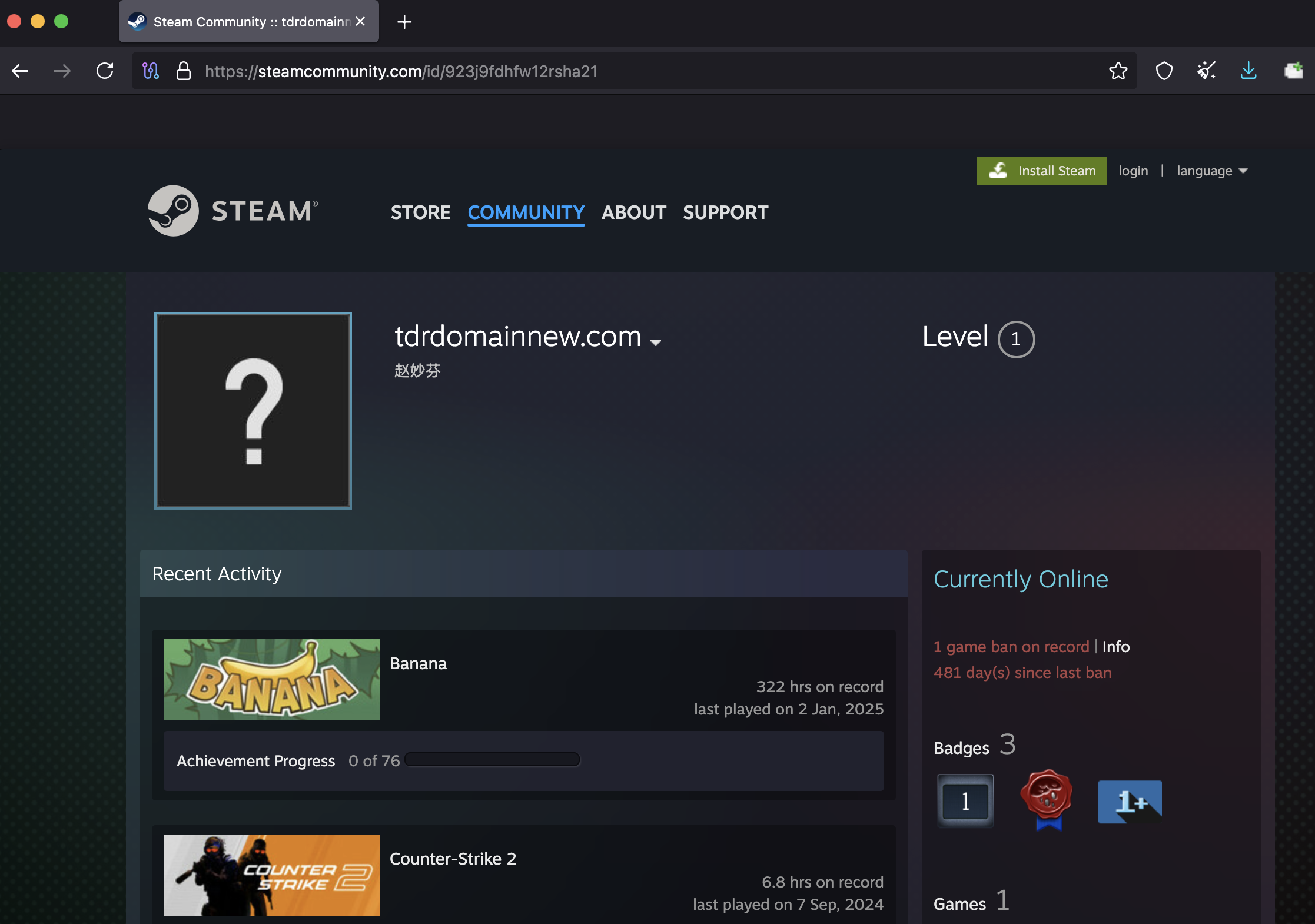
Example Steam profile page leveraged by CastleRAT as a command-and-control dead-drop mechanism.
Assessment & Defender Takeaways
This operation is notable not because of novel malware but because of intent clarity.
The actor:
Did not perform AD discovery
Did not attempt privilege escalation
Did not stage ransomware tooling
Instead, they:
Exfiltrated browser credentials
Proxied a live user browser
Attempted direct financial account takeover
Thanks to the researcher who initiated this operation (name withheld for privacy), they were able to decrypt CastleRAT command-and-control browser sessions directly from packet captures. The reconstructed browser views confirm that, during hands-on-keyboard activity, the threat actor focused exclusively on logging into financial institutions using credentials exfiltrated from the victim’s browser—behavior illustrated in the browser history screenshot below:
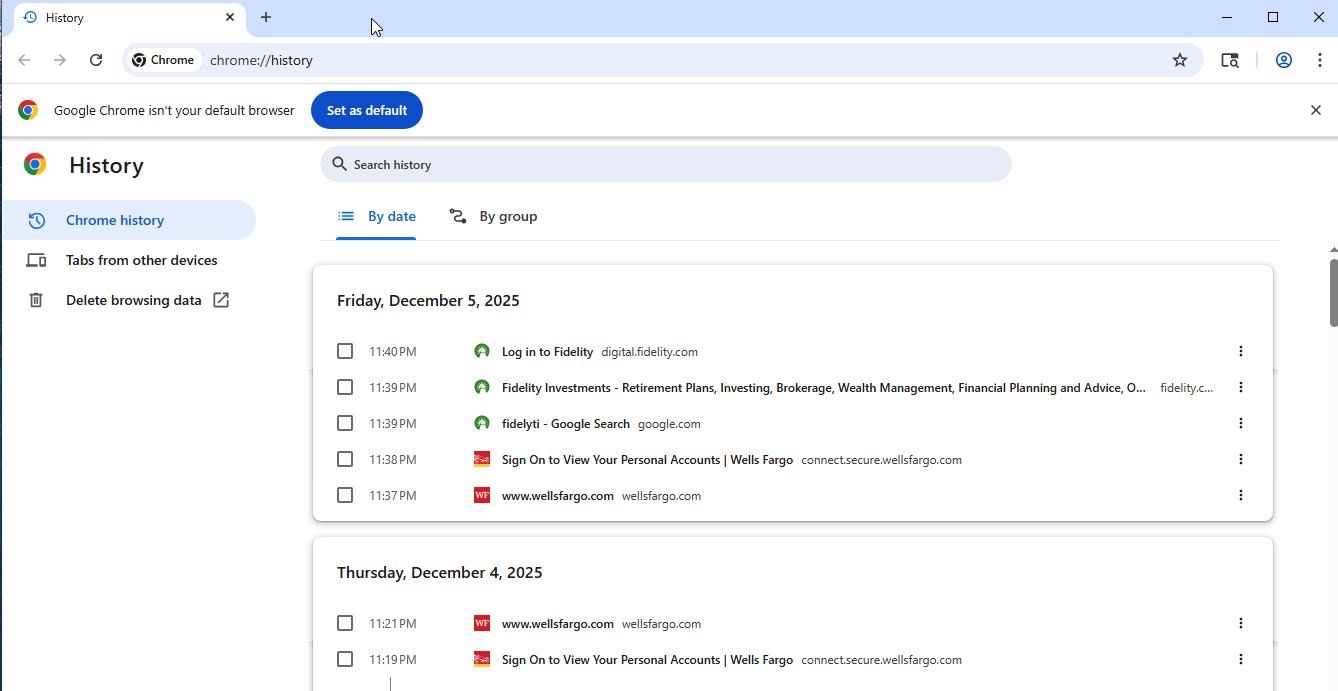
Chrome browser history from the replica workstation, capturing websites visited by the threat actor during live HoK activity.
This supports a growing assessment that certain malware clusters are optimized for immediate fraud and ATO, not resale of enterprise access or downstream ransomware partnerships. The deployment of multiple RAT families (NetSupport, Remcos, CastleRAT) appears less about redundancy and more about capability layering: persistence, credential access, and live interaction.
For defenders, the lesson is blunt:
If detection strategies stop at “malware executed,” you miss the real damage window. HoK telemetry, browser interaction capture, and post-exfiltration activity visibility are now essential to understanding attacker intent and stopping real-world impact.
Deception environments that allow attackers to believe they are operating on real endpoints remain one of the few ways to observe this full decision-making chain in the wild.